`
| |
|
Saturday, September 1st, 2012
Recently I facilitated a workshop at the Agile Goa 2012 Conference titled – “Agile Way of Dealing with Uncertainty in a Complex Adaptive World“.
Abstract: It is human nature to look for patterns while solving new problems. We have a dangerous tendency to reuse what we already know to solve the next problem. We rarely discard what we’ve learned; we simply build on top of it. Sometimes this is a useful tactic, but often new problems and their context are slightly (if not vastly) different than the previous ones. And applying our previous way of doing things, will not be best suited for tackling the new problem.
In the software world, we’ve seen a similar desire to find the “one true way”, “the BEST method”, “the silver bullet” to solve all software development problems. Alas, after decades of trying we’ve not found one.
In this workshop, I’ll let you discover why this is not possible and possibly explain how best to deal with this problem. This ideas in this workshop are based on my experience backed by latest research from Cognitive Science, Complex Adaptive System’s Theory and Evolutionary Psychology.
Slides:
Posted in Agile, agile india, Cognitive Science, Conference, Organizational | No Comments »
Saturday, August 11th, 2012
| Day 1 – Saturday, August 25th, 2012 |
 |
| Time |
Talk |
|
| 08:30 – 09:00 AM |
Registration |
|
| 09:00 – 09:30 AM |
Welcome Talk |
|
| 09:30 – 11:00 AM |
Agile Way of Dealing with Uncertainty in a Complex Adaptive World
Naresh Jain, ASCI |
|
| 11:00 – 11:15 AM |
Cofee/Tea Break |
|
| 11:15 – 12:00 PM |
Agile Way of Dealing with Uncertainty in a Complex Adaptive World …continued |
|
| 12:00 – 01:00 PM |
Turning into an Agile Engineering Manager
Debashis Banerjee, Yahoo! |
|
| 01:00 – 02:00 PM |
Lunch Break |
|
| 02:00 – 03:30 PM |
What is Kanban and why should I care?
Sreekanth Tadipatri, DeccanTech |
|
| 03:30 – 03:45 PM |
Cofee/Tea Break |
|
| 03:45 – 05:00 PM |
DevOps – The missing Secret Sauce
Ajey Gore, Hoppr |
|
| 05:00 – 06:00 PM |
To Explore or not to Explore… How we Crossed the Bridge
Nivedita Bawa, Microsoft |
|
| 06:00 – 06:30 PM |
Open Discussion |
|
| Day 2 – Sunday, August 26th, 2012 |
|
| Time |
Talk |
|
| 09:30 – 10:45 AM |
Agile Evolution & Academic Imperatives
Raja Bavani, MindTree |
|
| 10:45 – 11:45 AM |
Embracing Scrum – One step at a time
A real life case study with real world challenges
Niraj Kumar Bhandari, McKinsey & Co |
|
| 11:45 – 12:00 PM |
Cofee/Tea Break |
|
| 12:00 – 01:00 PM |
Implementing Agile: Do’s and Don’ts
Anay Kamat, PresentSoft Technologies |
|
| 01:00 – 02:00 PM |
Lunch Break |
|
| 02:00 – 03:00 PM |
Let Tests Drive Your Design…Yeah right!
Naresh Jain, ASCI |
|
| 03:00 – 03:30 PM |
Respect in the Agile context
Ravichandran J.V, Independent |
|
| 03:30 – 04:00 PM |
Cofee/Tea Break |
|
| 04:00 – 05:00 PM |
Challenges in doing Agile in IT Services
Srinath Chandrasekharan, HCL Technologies |
|
| 05:00 – 06:00 PM |
Retrospective |
Posted in Agile, agile india, Conference | No Comments »
Wednesday, August 8th, 2012
Learn… Connect… Network…
@ Asia’s Premier Agile and Lean Conference
27 and 28 February 2013 – Management Conference
1st and 2nd March 2013 – Technical Conference
Also, we have two other upcoming conferences you might be interested in:

Agile Goa 2012
25th and 26th August 2012
Our 5th Agile Conference in Goa. The purpose of this conference is to address the growing interest in light-weight software development methods and to provide a comprehensive overview of the current state-of-the-art Agile and Lean Values, Principles and Practices. Its also a great platform for the industry to meet the academics. |
Agile Coach Camp
Bengaluru 2012
Essence OVER Ceremony
Sep 14th and 15th 2012
Global unconference for Agile Coaches, Scrum Masters, Agile Trainers, Leaders, Change Agents and Mentors. For the second time in India. Will be hosted at Ramada Hotel Bangalore.
|
Agile India 2013 Conference Details:
If you attended Agile India 2012 conference, let me tell you, Agile India 2013 will be at least 10x better. You can choose to attend the Management conference or Technical conference or both. During this refreshing yet intense conferences you can:
Posted in Agile, agile india, Community, Conference | No Comments »
Wednesday, July 4th, 2012
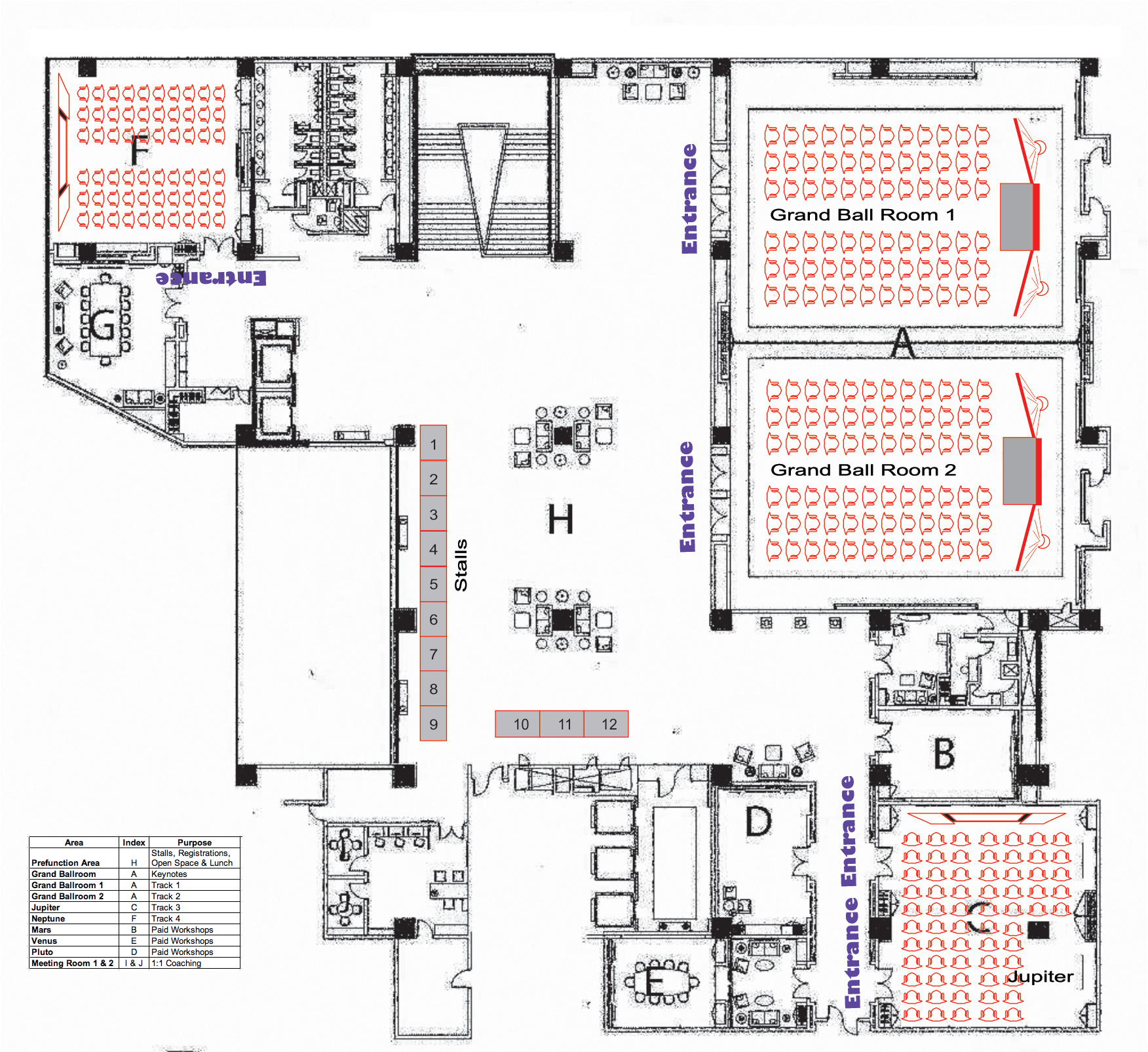
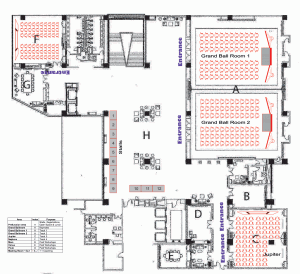
We’ve been working with our event management partner to figure out the conference layout for the Agile India 2013 Conference. As you might know, we are hosting the conference at Sheraton Hotel. Following is the layout we’ve come up with:
Posted in Agile, agile india, Community, Conference | No Comments »
Saturday, November 12th, 2011
Folks, Agile India 2012 conference is live! What does that mean?
Early-bird registration has started in full swing.
Sponsorship detail are published for interested companies.
We are reviewing all the awesome proposals submitted by experts from around the world. We should have the program live by end of Nov.
Posted in Agile, agile india, Community, Conference | No Comments »
Saturday, May 28th, 2011
For the last 6+ years, few of us in India, are trying to establish a sustainable Agile community. The truth is that we are still struggling to have a self-sufficient, self-driven community.
We don’t seem to be hosting regular user group meetings. Our sporadic events seem to attract mostly new people each time. Next meeting we rarely see them. Huge number of people sign up, but only a fraction show up.
Its not just the Agile community, we’ve tried many other communities like .Net User Group, TechCamp, GeekNight, BarCamps, etc. Except the Linux community (FOSS now) I don’t think any other software community has really sustained itself.
This is very contrary to what I saw when I used to facilitate the Agile Philly User Group and the Philly GeekNight. People used to drive 2 hrs to attend the meeting. We had the same set of people coming every meeting. We all had this sense of learning and growing together.
What do you think is different in India?
IMHO the biggest problem I see is that there is so much “mediocre job opportunity” available, that frankly software professionals can be in demand for many years without learn anything new. With many people I sense a “there-is-no-need-to-stretch-ourself” attitude. Necessity is the mother of innovation and action. People don’t see the necessity. Period.
There are very few people I know who care about learning and exploring and growing.
Some other problems I see:
- For most people, there is no end to mediocre opportunities and they are happy with it. “This job sucks, but its OK, I get a decent salary.” kind of attitude. The ones who want to purse big dreams mostly move to US or other places. (There are always exceptions to the rule.)
- With all the personal, social life & society obligations and working late to catch up with counterparts in other countries, there is very little time left for user groups and other initiatives. Even if one is interested, the traffic and other logistics make it next to impossible to motivate people.
- There is country culture, but the biggest culprit is the Organization culture. At certain places I’ve worked, if you are not learning new stuff, you feel like a piece of shit. But in many other companies I’ve visited, that’s not the case.
- Indian Software Industry is unfortunately very “brand conscious“. If its a big name speaking at an event, people will walk a whole day to attend the event. But if its a local speaker presenting, it doesn’t appeal.
I’m sorry if you find me ranting, but I’m disappointed with the attitude. I’ve almost lost hope, but may be you can show me the light.
Posted in agile india, Community, Crib, Organizational | 4 Comments »
Saturday, July 10th, 2010
A prioritized user story backlog helps to understand what to do next, but is a difficult tool for understanding what your whole system is intended to do. A user story map arranges user stories into a useful model to help understand the functionality of the system, identify holes and omissions in your backlog, and effectively plan holistic releases that delivery value to users and business with each release.
Posted in Agile, agile india, Analysis, Coaching, Planning, post modern agile, Product Development | 2 Comments »
Saturday, July 10th, 2010
How do you know you are ready to start iterating? In some cases, very little is needed before the first iteration. In other cases, rushing to iterate (because you were told to) can lead to weeks of time wasted overly focused on delivering a poorly understood product.
In this presentation by David Hussman titled Getting Ready to Produce at Agile Mumbai 2010 Conference, David provides concrete tools for discovering your product context and assessing whether you are ready to start building and / or iterating. Participants learned tools for defining how much process you need and tools for truly understanding what you are building and why, as well as who will use it, why they will (or will not) use it and why.
Posted in Agile, agile india, Coaching, Community, Conference, post modern agile, Product Development | No Comments »
Saturday, July 10th, 2010
10 years after the introduction of agile methods, many communities are succeeding in their adoption while others are struggling or failing. Why? Many struggle because agile methods were introduced in an overly prescriptive manner. People were told to follow a set of practices instead of learning to use the agile practices and values to amplify their existing strengths and address their challenges.
In this talk, David Hussman shares successful coaching techniques he uses to grow sustainable agility that lasts beyond the early iterations or the first few agile projects. David begins with a series of tools to help you build a solid foundation: assessments, pragmatic practice selection, chartering and product planning tools. He then moves on to discuss ideas for finding a groove of discover and delivery that is best suited to your project community.
As a full time working coach, David uses coaching stories and experiences to discuss establishing strong cadence while also building the essence of coaching and coaches in your community Whether you are new to agile methods or you are a seasoned players, this session will help you grow your coaching skills and your ability to truly discover and deliver real value.
Posted in Agile, agile india, Coaching, Community, Conference, post modern agile | No Comments »
|