`
| |
|
Archive for the ‘Community’ Category
Thursday, June 12th, 2014
We are delighted to announce the first Functional Programming conference in Asia. Functional Conf will be hosted in Bangalore, India on Oct 9-11th. This is your golden opportunity to meet the Functional Programming community.
For over 35 years, functional programming has been a hot research topic. However in the last 5 years, driven by the need to build massively concurrent systems and to handle big-data, we’ve experienced a rapid adoption of functional programming concepts by diverse companies, ranging from tech start-ups to financial institutes.
These days, functional programming is at the heart of every, new generation programming technologies. Companies are employing functional programming to enable more effective, robust, and flexible software development. This has given birth to a very vibrant community of functional programmers, who are constantly exploring ways to bring functional programming concepts to the world of enterprise software development.
Functional Conf is designed to bring the growing community of functional programmers together under one roof. At Functional Conf:
- participants can understand the fundamentals concepts behind functional programming,
- they can learn how others are using functional programming to solve real world problems,
- practitioners can meet peers and exchange their experience,
- experts can share their expertise on practical usage and gotchas in functional programming concepts.
If you are interested in presenting at the Functional Conf, please submit your proposals at http://confengine.com/functional-conf-2014
Registrations have already started. Register now at http://booking.agilefaqs.com/functional-conf-2014
To know more about the conference, please visithttp://functionalconf.com
Posted in Community, Conference, Functional | No Comments »
Thursday, June 12th, 2014
We are delighted to announce that this year we’ll be hosting the 4th annual (official) Selenium Conference in Bangalore, India. This is your golden opportunity to meet the selenium and test automation community in general.
The goal of the conference is to bring together Selenium developers & enthusiasts from around the world to share ideas, socialise, and work together on advancing the present and future success of the project.
If you are interested in presenting at the Selenium Conf, please submit your proposals at http://confengine.com/selenium-conf-2014
Registrations have already started. Register now at http://booking.agilefaqs.com/selenium-conf-2014
To know more about the conference, please visit http://seleniumconf.org
Posted in Community, Conference, Testing | No Comments »
Wednesday, May 14th, 2014
Recently, we announced the Selenium Conf 2014 to be held in Bangalore India. Based on my past experience running others international conferences for the last 10 years, I put together the following review process:
Interested speakers are requested to submit their proposals directly on our proposal submission system. All proposals will be public. Registered user of the submission system will be able to comment on your proposal. Submitters may also post comments on reviews or public comments of their own proposals to provide clarifications, explain revisions and respond to questions. Comments by public users are information that can be utilised by both the submitter and the review team. Ultimately the decision to accept a session resides with the program team, the program chair, and the conference chair.
Your proposal stands the best chance to be selected, if it’s unique, fully flushed, ready-to-go. Ensure you provide links to:
- previous conference or user group presentations
- open source project contributions
- slides & videos of your (present/past) presentations
- your blog posts or articles on this topic
- and so on.
Following is my rationale behind this review process for conferences:
- Fact: Writing a good proposal is one thing and Presenting on stage is a completely different thing. One could write really good proposal, but might be a poor speaker on stage. The conference attendees don’t care how good the speaker’s proposal was, they care how good was the delivery of the talk. Hence selecting proposals based on their ability to present rather than JUST their proposal becomes extremely important. I understand we want diversity and we want to give new speakers an opportunity. But do we really want a speaker on stage who has never presented anything ever? Hopefully they have presented at a local conference or a local user group or even within their company. If noting, they can do a short 5 mins screencast or video on the talk and upload that video. We want them to contribute to open source projects and write at least a blog or an article about it. My thinking is: what is the harm is asking speakers to provide us this info, so the community and the review team can make a better, more informed decision?
- Also along with this, using an open submission & review system, has the following advantages:
- The most important element it brings is the transparency. (Being an open community, I’m sure we all appreciate that element.)
- It really helps create a buzz for the conference. Which in-turn helps us get really good proposals and opportunity to get sponsorship.
- When I as a speaker, look at other proposals, I get encouraged to submit a proposal myself.
- Also in my experience the overall quality of the proposals increase because of the open eco-system and public feedback mechanism.
- With the help of public voting, the review team gets a good sense of which topics people are most interested. (Public voting can be gamed, but there are ways to limit it. Also we might not pick the exact proposal with the highest votes, but certainly select similar topic.)
- In the end, if the team still wants to do a blind selection, we can certainly export the proposals into a format they want and give them just the info they need. The approach we take is more open and allows us to achieve both options.
Would love to hear your experience.
Posted in Community, Conference | No Comments »
Monday, March 10th, 2014
tl;dr: Thank you for making Agile India 2014 (AI14) a grand success.
Slides: Several speakers have already uploaded their slides. They are available via http://present.agileindia.org/schedule/agile-india-2014. Rest will upload their slides in the coming days.
Videos: If you like to get a copy of all the videos from the conference, you can purchase the entire DVD set here: http://booking.agilefaqs.com/agile-india-2014
Feedback: Anyone who attended the conference would have noticed that the conference doesn’t provide any feedback forms. How bizarre is that for an agile conference? Let me tell you something, asking attendees to fill out feedback forms at the conference when there is so much going on is very ineffective. Have you ever wondered why after filling all those feedback forms or taking customer surveys things hardly change?
At Agile India, we take feedback very seriously and hence we believe in talking directly with you. If possible, we try and implement your suggestion right-away instead of waiting till the next conference. I’ve personally collected face-to-face feedback from over 300 attendees. However we were not able to talk to everyone and as a fall back option, we would encourage you to visit http://bit.ly/1nrjpVn and submit your valuable suggestions. The top 3 suggestions, selected by our program committee, will stand a chance to win an iPad mini or a free pass to next year’s conference. However please read the entire email, before you jump off.
Long Version:
As we are wrapping up the last few tasks from AI14, I would like to take a few minutes and share my reflections on conference and the growth of agile community in India since we started in 2004 (10 years ago.)
First of all, thank you for participating in our largest conference ever! We were happy to host 1236 Attendees from 28 different countries. We had attendees playing 342 different roles from 226 different companies: http://blog.agileindia.org/2014/03/04/agile-india-2014-conference-final-attendees-profile/
For 10 years we’ve been running these conferences and every year the community-feeling keeps getting better. This year, finally one could sense the true spirit of large scale community at the conference. It was not a one person show anymore. Also, it was amazing to see how well folks were networking and learning from each other (peer-to-peer learning.)
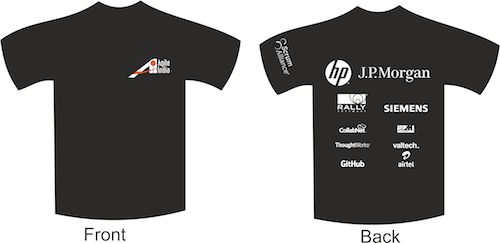
This year we got tremendous support from a diverse set of companies sponsoring the event. Many people appreciated that the conference was not only supported by Agile tools & consulting companies, but was also supported by companies like JP Morgan and Siemens. This clearly shows that the industry believes in the agile movement and wants to invest in nurturing our budding community. I greatly appreciate the support from our partners.
Another thing the participants really appreciated was, how inclusive the conference program was. In the early days of Agile India, we were very heavily influenced by eXtreme Programming. But over the years, we’ve tried our best to be more inclusive of other methods (Scrum, Kanban, Lean Startup, DSDM, etc.) and frameworks (SAFe, DAD, etc.) We strongly believe that our job is to create an equal platform for everyone, get the best in the industry and let people decide what makes most sense to them, in their context.
As you might know, the entire conference program was put together by a committee of volunteers (http://2014.agileindia.org/organizers/), who are selected via a nomination process. Also anyone is allowed to put in a proposal via our open submission system (http://present.agileindia.org). We got 263 proposals for talk, out of which 64 proposals were selected.
You might not be aware, how much blood and sweat goes into putting together a conference of this scale. Every single person, who helped us with the conference is a volunteer. People who have regular day time jobs, just like you. Our team has spent many sleepless nights starting from June 2013 to Feb 2014 (9 months.) It is a big commitment. I sincerely want to thank every volunteer who made this possible.
We encourage you to participate in this process as well. There are 3 level in which you can participate:
- Join the Program committee (chairs, core members and reviewers)
- Share your experience by putting in proposals for talks you would like to present at the conference
- Give constructive feedback via votes and comments to other proposals, to refine them.
Please follow @agileindia on twitter to get updates. We’ll have a call for all of these (May time-frame.)
Quick note to presenters: If you would like to present at the next year’s conference, start now. Start by presenting inside your company. Then at a local user group. Then at one of the regional conferences. Agile India runs many regional events every year: http://agileindia.org/events Also consider pairing with an experience speaker. There are no shortcuts to presenting at our annual, international conference.
Dave Thomas Keynote:
After signing the Agile Manifesto, this was the first Agile conference in 13 years that Dave Thomas was attending. I think this is special. Many attendees told us that Dave’s keynote was the highlight of the conference. Dave can tell you, how much I pestered him to accept our invite. We always strive to bring you the best.
Paid Workshops:
=============
Unlike last year, this year we got a really good response for the paid workshops. Just the workshops attracted over 300 people and the feedback from the workshops was very promising. The paid workshops not only gives you an opportunity to spend quality time with an expert, but it also helps us to cover some of the speaker expenses and attract more experts to the conference. If you were to attend the same speaker’s training outside the conference, it would cost you at least 3 times more. The conference, massively subsidies the cost for the greater good of the community.
Food:
====
Overall the feedback on quality & taste of the food was very positive. Many attendees commented that they hate hotel food, esp. since it creates a burning sensation after eating. But they were surprised they did not have any such problems. Nor did the food make them sleepy. We know that food is a big part of the conference experience. And hence I had personally tasted and selected the entire menu. So if you did not like something, blame me.
Some tweets from the conference:
==========================
#AgileIndia2014 – an awesome conference and one to consider adding to your must-attend events.
As world conf traveler, I can say #AgileIndia2014 is 1 of world’s top Agile confs;
Leaving #agileindia2014 – what an amazing time! Thanks to @nashjain and everyone else who made it happen 🙂
It’s great to hear “understand the problem you are trying to solve” as a common theme from many #agileindia2014 speakers.
Our team had a wonderful learning experience at #AgileIndia2014. Congratulations for organizing such a brilliant event.
Few other things worth highlighting:
============================
First Registration Slab was sold out in flat 7 mins. This was even before the conference program was available. Trust me, this is unheard of in India. There are at least 200 people who’ve been attending Agile India conferences for more than 3 years and they mostly pay out of their pocket to attend. To encourage such passionate folks, we kept a super-early-bird registration slab. We believe they are a key part of our community.
Experience Reports and Case Studies:
==============================
As you know, this year we’ve focused a lot on getting as many case studies and experience reports at the conference. To further maximize your learning from these sessions, we’ve published all these reports here: http://2014.agileindia.org/program/reports/ These reports will continue to be freely available for anyone interested in learning.
Lightning Talks:
============
Lightning talks were very well received. Many people having great ideas to share. Next year we plan to structure them little better and make them more visible.
Not everything was perfect at the conference, however the attendees did a great job in cooperating with us. It was amazing to see them take ownership of the conference and work patiently with us.
A few unexpected things worth highlighting:
==================================
Different floors: Original plan was to have all the 3 parallel tracks on the same floor, but only 3 days before the conference the hotel told us that the divider in the grand ballroom, which is used to split the grand ballroom into 2 halls is not working. We had to shift one of the tracks to Sigma hall (which was 2 levels above) and move the paid workshops elsewhere. I could see the frustration in people trying to find Sigma hall and move between floors. But hardly anyone complained. They gave us the benefit of doubt. Thank you!
Speaker Dropouts: We had a few speakers (including a keynote speaker) dropout last minute. We tried our best to cover up the slots with something equally interesting. IMHO this is true agility in action.
Cramped Hallways: The hallways were quite cramped esp. during the breaks. We had not expected such a great response from sponsors, when we originally planned the conference. Other than the hallway, we could not find an alternative, central location for the title sponsor stalls. The stalls certainly added to the space constraint in the hallway. But it was also fun to have some ongoing action in the hallway.
Registration process on the first day is always challenging. We had so many last minute changes (attendees swapping names and days) which makes it extremely hard to streamline the process. As far as I’m aware, we embraced it and accommodated all the changes. Our team of volunteers did their best to make it as smooth as possible. Next year we are planning to revamp the whole registration process by using RFIDs and other technology solutions.
Wifi Connection: Internet Wifi connection is still extremely expensive (~ 10 Lakh Rs.) for conferences. So we get it sponsored from Airtel. But there is only so much we can demand when we get something sponsored. Having said that, compared to last year, this year the wifi connection was much better. We had 5 routers and few of them were constantly overloaded. With over 200 people trying to connect to each router, there were moments when new connections could not be established. Whenever we noticed something like this, we tried to reset the route, but all of this took time and I could see some people unhappy about it.
Few things we tried for the first time:
Agile Art!
=======
During all the three evening receptions, the participants created a visual art piece together with the help of Richard Kasperowski and the team from McAfee. This helped the participants to create new connections and build/reinforce the community of Agilists in India and around the world. On the fourth day, we displayed our art, which was a big hit. I saw many people posing in front of the art piece for pictures. Finally, we invited attendees to take pieces of the art as gifts as reminders of our potential to create greatness together.
Book Signing and Book Store
=======================
Every year Agile India attracts top speakers from around the world. Most of these speakers have a track record of writing very influential books. To enable the fan/follower of these authors, we set up a book store at the conference and had book signing events where attendees were able to get a personal autographed book by the authors. Many folks appreciated this initiative. And we plan to make it even stronger next year.
Agile India Webinar Series
=====================
We invited many speakers to the Agile India 2014 Conference. However due to travel constraints or other conflicts, they were not able to make it. However few of them agreed to do an exclusive webinar (Google Hangout) with us. The recordings of their webinar is available at: http://2014.agileindia.org/program/webinars/
Agile India Job Fair
===============
Agile India was happy to host the world’s first job fair dedicated for hiring Agile practitioners. The goal of the Agile Job Fair was to create a platform dedicated for the Agile practitioners to meet their potential Agile employers and for companies to find Agile practitioners to enable their journey to Agile adoption and excellence. We had over 200 people who applied to participate in the job fair. Also we had a total of 6 companies who participated as employers. On the day of the event, we had only 40 odd people show up. This was disappointing. However the 40+ who showed up, really appreciated the initiative. Next year we plan to host the job fair, during the conference itself.
P.S: Every week, I get at least 10 emails from people asking me about Agile India membership. I don’t get it! Why do you want to give me your hard-earned money for no good reasons? The current membership program has no real benefits and hence we’ve closed it. I’m currently working on a new membership model for Agile India, which will provide real membership benefits. At that point you can justify spending money on membership. If you have ideas on how we should structure the membership program, please drop me a note. Good ideas win free membership. Stay tuned for more…
Posted in Agile, agile india, Community, Conference | No Comments »
Tuesday, March 4th, 2014
Agile India 2014 Conference was happy to host 1236 attendees from 28 different countries. The attendees belong to 226 different companies and play 342 different roles.
Attendees Role – 342
| Role |
| Account Qlty Manager |
Agile | Lean Coach |
Agile and SW Process consultant |
| Agile Business Analyst |
Agile Coach |
Agile Coach & PMO |
| Agile Coach and Strategist |
Agile Coach, Trainer, and Consultant |
Agile Coach Wrangler |
| Agile Coach/Scrum master |
Agile CoE Leadship Team |
Agile Consultant |
| Agile Practitioner & Consultant |
Agile Product Manager |
Agile Program Consultant |
| Agile Project Manager |
Agile Strategist & Coach |
Agile Technologist |
| Agile Trainer and Coach |
Agile Transformation Consultant |
Agile Transformation Manager APA |
| AGM |
ALM R&D |
Analyst IT |
| Application Analyst |
Application Developer |
Architect |
| Assistant Manager |
Assistant Manager Process & Quality |
Assoc. Director – Projects |
| Associate |
Associate Architect |
Associate General Manager – Consulting |
| Associate Java Developer |
Associate Lead |
Associate Lead – Projects |
| Associate Professor |
Associate Project Manager |
Associate Technical Architect |
| Associate VP |
Asst Manager Process & Quality |
Attendee |
| Author |
Blogger |
BTS Head of Corporate |
| Business Analyst |
Business Manager |
Business Transformation Coach, Agile Coach, Open Space Facilitator |
| CEO |
Chief Consultant |
Chief Architect |
| Chief Consultant |
Chief Functional Architect |
Chief Scientist |
| CI Expert |
CIO |
Client Partner |
| Client Principal |
Coach |
Code Monkey |
| CoE Head |
COE Manager |
Co-founder |
| Co-founder and VP – Product |
Colaboration catalyst |
Competence Group Manager – M2O |
| Consultant |
Consultant – Agile Center of Excellence |
Consultant Manager |
| Contact Centre Team Lead |
CTO |
Customer Care Associate, GM Solutions & Tech |
| Delivery Excellence Head |
Delivery Head |
Delivery manager |
| Delivery Manager / TTS / Delivery Services |
Delivery Manager TTS |
Dev Management Products |
| Dev Staff Engineer |
Developer |
Development Line Manager |
| Development Line Manager – EPG Product |
Development Manager |
Development Manager/Expert |
| Development Project Manager |
Development Vice President |
Director |
| Director – Agile CoE |
Director – Head of Software Development |
Director – Product Marketing |
| Director – Products |
Director – Projects |
Director, Agile Software Engineering |
| Director, Engineering |
Director, India Sales Operations |
Director of Engineering |
| Director of Platform Development |
Director Quality |
Director, R&D |
| Director- R&D Competency |
Director Technology |
Director-Projects |
| Doctoral Student |
Engineer IT |
Engineering Manager |
| Executive |
EXECUTIVE DIRECTOR |
Executive Manager, Risk Advice |
| Expert Software Engineer |
Foudner |
Founder |
| Founder & CTO |
Founder CEO |
General Manager |
| General Manager – Quality |
General Manager and Market Principal |
GM, Head : Continuous Improvement |
| Group Manager – Consulting |
Head – IT,Defence and Aerospace markets |
Head – Technology Competences |
| Head of Delivery |
Head of Engineering |
Head of IT Delivery Competence Groups |
| Head of Offshore Development |
Head of People and Culture |
Head of Project Management |
| Head of R&D Operations |
Head of Technology – Customer Systems |
Head of Technology – Group Platform |
| Head- Organisational Markets |
Independent |
Integration Manager |
| IT Architect |
IT Portfolio Manager |
Lead |
| Lead Application Architect |
Lead Consultant |
Lead Consultant – Business Analyst |
| Lead Engineer |
Lead Manager |
Lead Program Integrator |
| Lead SCM Engineer |
Lead Software Development |
Lead Software Engineer |
| Lead System Designer |
Line Manager |
Manager |
| Manager – Delivery Services |
Manager – Engineering |
Manager – Projects |
| Manager / Scrum Master |
Manager – Software Development |
Manager Delivery Services |
| Manager IT |
Manager Program Management |
Manager QA |
| Manager Software Development |
Manager, Software Development Engineering |
Manager-Delivery Services |
| Manager-Software Development (ERP) |
Managing Director |
Marketing & Events Specialist |
| Marketing Manager |
Marketing Programs Manager |
Marketing Programs Manager1 |
| Portfolio Manager |
Portfolio Project Manager |
Practice Head |
| Practice Head – ATS |
Practice Head – Lean and Kanban |
Practice Manager – SMAC |
| Practice Tech Lead, MCDE |
Pre-Sales Manager |
Pre-Sales (Technical Consultant) |
| President, Asia Pacific Operations |
Principal |
Principal Agile Coach |
| Principal Automation Engineer |
Principal Consultant |
Principal Consultant – ERP, EAS Analytics |
| Principal Engineer |
Principal Engineering Project Manager |
Principal Group Program Manager |
| Principal Program Manager |
Principal Researcher |
Principal Software Developer |
| Principal Software Engineer |
Process Manager |
Product Developer |
| Product Governance Head |
product Management |
Product Manager |
| Product Manager B2B/B2G |
Product Manager, Solutions |
Product Marketing |
| Product Owner |
Product Specialist |
Product Test Analyst |
| Program Architect |
Program Director |
Program Director – BSC |
| Program Management Advisor |
Program Management Senior Advisor |
Program Manager |
| Program Manager – Agile Transformation and Scaling |
Program Manager – CM |
Programmer Analyst |
| Project / Program Manager |
Project Analyst |
Project Lead |
| Project Manager |
Project Manager IT |
QA Associate Manager |
| QA Engineer |
QA Head |
QA Manager |
| Quality Analyst |
Quality Assurance Architect |
R&D Head |
| R&D Project Manager |
R&D Section Manager |
Requirement Analyst |
| RM – South |
Sales Manager |
Sales Specialist |
| Scrum Master |
Senior Agile Coach |
Senior Agile Practitioner |
| Senior Architect |
Senior Business Analyst |
Senior consultant |
| Senior Delivery Manager |
Senior Delivery Manager / TTS / Delivery Services |
Senior Design Engineer |
| Senior Dev |
Senior Development Manager |
Senior Director |
| Senior Director – Projects |
Senior Engg Project Manager |
Senior Engineer – Process |
| Senior Engineer Specialist |
Senior Engineering Manager |
Senior Engineering Project Manager |
| Senior Group Manager |
Senior IT Engineer |
Senior Manager |
| Senior Manager – Agile Working Group |
Senior Manager – Development |
Senior Manager – LEAN |
| Senior Manager , Program Management |
Senior Manager – Projects |
Senior Manager – Quality |
| Senior Manager – Release Management |
Senior Manager – Test Engineering |
Senior Manager Business Development |
| Senior Manager of Engineering |
Senior Manager Projects |
Senior Manager Software Development |
| Senior Manager Technology |
Senior Product Manager |
Senior Productivity Expert |
| Senior Professional |
Senior Professional – Technology Analyst |
Senior Program Manager |
| Senior Project Lead |
Senior Project Manager |
Senior Quality Engineer |
| Senior Software Developer |
Senior Software Engineer |
Senior Software QA Engineer |
| Senior Sofware Engineer |
Senior Sourcing Specialist |
Senior Systems Analyst |
| Senior Systems Specialist |
Senior Tech Lead |
Senior Technical Architect |
| Senior Technical Lead |
Senior Technical Presales Specialist, Sales |
Senior Technical Staff Member |
| Senior Test Engineer |
Senior Vice President |
Senior Quality Assurance Engineer |
| Software Architect |
Software Artisan |
Software Consultant |
| Software Developer |
Software Development Advisor |
Software Development Engineer |
| Software Development Manager |
Software Development Staff Engineer |
Software Engineer |
| Software Engineer Manager |
Software Engineer Senior Manager |
Solution Architect |
| Solutions Director |
Speaker |
SQA |
| Sr Analyst – Apps Prog |
sr. developer |
Sr IT QA Manager |
| Sr manager |
SR. MANAGER, IT |
SR. QA ENGINEER – II |
| Sr Quality Engineer |
Sr Technology Manager |
Sr Test Engineer |
| Staff Engineer |
Student |
SYSTEM ANALYST |
| System Specialist |
Systems Analyst – Test Engineering |
Systems Engineer |
| Systems Specialist |
Team Lead |
Team Manager |
| Tech Lead |
Technical / Process Advisor |
Technical Architect |
| Technical consultant |
Technical Director – Product Management |
Technical Expert |
| Technical Lead |
TECHNICAL LEADER.ENGINEERING |
Technical Program Manager |
| Technical Specialist – Quality |
Technologist |
Technology Specialist |
| Test Lead |
Test Practice Lead |
Test Senior Engineer |
| Test Technologist |
UK Director |
UX wrangler |
| Vice President |
Vice President – STB Solutions |
Vice President and Regional IT COO |
| Vice President, R&D |
Vice President-Engineering and Delivery |
VP |
| VP, Chief Quality Officer |
VP Global Sales |
VP Solutions |
Attendees Organization – 226
| Organization |
| IIM Bangalore |
3Five8 Technologies. |
7N |
| Accenture |
Aconex |
Aditi Technologies |
| Aditya Birla Minacs |
ADOBE SYSTEMS |
Agile Coaching Institute |
| Agile FAQs |
Agile Partnership |
AgileSparks |
| Aguai Solutions |
Alcatel Lucent |
Alliance Global Services |
| Allscripts India |
Amadeus Software Labs India |
Amazon India Development. |
| Amdocs |
AON |
Aptean |
| Arc Alternatives |
ARICENT |
Artech Infosystems |
| Arts Interstices |
Asprotunity |
BA Continuum |
| Bankdata/7N |
Bankwest |
BigVisible |
| Bizsciences LLC |
BMC Software Inc. Pune |
BNP Paribas India Solutions |
| Bold Mover |
Bootcamp |
Brainysys Technologies |
| bwin.party |
CA Technologies |
Catalise Consulting |
| CatalystOne Info Solutions |
ceezone |
CeeZone Consulting |
| CenturyLink India |
CGI |
Cisco |
| CodePink |
Cognizant Technology Solutions |
CollabNet |
| Consulting |
consulting connoisseurs |
Crest Premedia Solutions |
| CSC |
CTI Co-Active Coaching |
Cybage Software |
| Cybrilla Technologies |
David J Anderson & Associates |
Dell |
| Digite Inc |
Directing the Agile Organisation |
Direction Software Solution |
| DispatchTrack Inc |
DreamOrbit Softech |
DSS |
| E. Slomba Arts Interstices |
Edventure Labs |
EMC Corporation |
| Enteleki |
Enteleki Technology Solutions |
Entrib Technologies |
| Envestnet |
EPlan Services |
Equal Experts |
| ExelPlus Servcies |
Exfo |
Exilesoft |
| Fiberlink Software, an IBM Company |
Fidelity IBS |
Fidelity National Financial |
| FMR India |
Ford Technology Services India |
GE Energy |
| GE Healthcare |
Gembatech |
Geometric |
| Gislen Software. |
GlobalLogic |
gnuyoga.in |
| GOA UNIVERSITY |
Groupon |
Hansoft |
| HCL Technologies |
HeadEnd Group |
Hewlett-Packard India Software Operations |
| Honeywell Technology Solutions |
Hoppr |
HP |
| Huawei India |
Huawei Technologies India. |
IBM |
| IBM India. |
IDRBT |
IFS Research and Development International LTD |
| IHS Global |
IIM Bangalore |
IIT Bombay |
| Impelsys |
Independent |
Independent Agile Consultant |
| Industrial Logic |
Infocareer |
Infosys |
| InMobi |
INNOVENTES TECHNOLOGIES |
INTEAMO INNOVATIONS & SOFTWARE PRIVATE LIMITED |
| Intel Corporation |
Intel Technology India |
Intelliant |
| IQ Business |
Ishi Information Systems |
IVY |
| IVY Comptech |
J P Morgan Chase |
Jeeves Information Systems |
| J.P. Morgan |
JP Morgan Chase |
Khanyisa Real Systems |
| L&T Infotech |
Lynne Cazaly |
managewell.net |
| Manipal Global Education services |
Marin Software |
Markit India |
| McAfee Software India |
Mckinsey & Company |
Mic |
| Micromen Software Solutions |
Microsoft |
Milaap Social Ventures |
| Mindtree |
Misys |
Multunus Software |
| Napa India |
Nokia |
Nokia (Maps Division) (HERE India) |
| NotiPhi |
NSN |
Oracle |
| Ostrya Labs |
P5Systems |
Paypal India |
| Persistent System |
Philips Electronics India |
Pitney Bowes |
| PMI India |
Pragmatic Programmers, LLC |
Principal Global Services. |
| Prowareness |
PubMatic |
Purple Candor |
| QAI India |
Qualcomm |
QUALCOMM INDIA |
| Quintiles |
Rally Software |
REA Group |
| Red Panda. |
RENISHAW METROLOGY SYSTEMS |
Rotary International |
| Sabre |
Sabre Holdings |
Sabre Travel Technologies |
| SAP Labs India |
Sapient Consulting |
SAS Research & Development |
| Scaled Agile, Inc. |
Schlumberger |
Schneider Electric India |
| Self |
SHOPPERS STOP LTD |
SIEMENS |
| Siemens AG Healthcare |
Siemens Technology & Services. |
SITA |
| Smartesting |
Societe Generale |
Software AG |
| Software AG Bangalore Technologies |
Software Artisan |
SolutionsIQ India |
| Sparks59 |
SpiderLogic |
SpiderLogic India |
| Suncorp |
SunGard |
SunGard Consulting Services |
| Symphony Teleca Corporation |
Synerzip Softech India. |
Target |
| Target Corporation |
Target India |
Tata consultancy services |
| Tavisca Solutions |
TENAGA NASIONAL BERHAD |
Tesco Hindustan Service Center |
| Tesco Hindustan Service Center, Bangalore |
TheTrainline |
Thomson Reuters |
| Thomsonreuters |
ThoughtWorks |
Toobler Technologies |
| Unicom Learning |
Valtech |
Valuemomentum |
| VMware |
Walmart |
WaveTable |
| Webonise Lab |
Winjit Technologies |
WIPRO Technologies |
| With Great People |
Woolworths |
Xebia IT Architect |
| Xerox |
Xicora Consultants |
Zen Digital |
| 15 |
Countries – 28
| Country |
# of Attendees |
| Australia |
17 |
| Bangladesh |
9 |
| Canada |
4 |
| China |
12 |
| Denmark |
6 |
| Egypt |
7 |
| Finland |
2 |
| France |
5 |
| Germany |
6 |
| Gibraltar |
1 |
| India |
947 |
| Indonesia |
9 |
| Israel |
5 |
| Japan |
12 |
| Malaysia |
15 |
| New Zealand |
4 |
| Norway |
3 |
| Pakistan |
13 |
| Russia |
21 |
| Singapore |
26 |
| South Africa |
3 |
| Spain |
6 |
| Sri Lanka |
28 |
| Sweden |
7 |
| Uganda |
1 |
| Ukraine |
3 |
| United Kingdom |
22 |
| United States |
43 |
Gender
| Gender |
Count |
| Male |
922 |
| Female |
314 |
Posted in Agile, agile india, Community, Conference | No Comments »
Friday, February 21st, 2014
As of Feb 20th 2014, the following folks have registered for the Agile India Conference
Roles – 320
| Job Title |
| Account Qlty Manager |
Agile & Lean Coach |
Agile Business Analyst |
| Agile Coach |
Agile Coach and Strategist |
Agile Coach, Trainer, and Consultant |
| Agile Coach Wrangler |
Agile Coach/Scrum master |
Agile CoE Leadership Team |
| Agile Consultant |
Agile Practitioner & Consultant |
Agile Product Manager |
| Agile Program Consultant |
Agile Project Manager |
Agile Strategist & Coach |
| Agile Technologist |
Agile Trainer and Coach |
Agile Transformation Consultant |
| Agile Transformation Manager APA |
ALM R&D |
Analyst IT |
| Application Analyst |
Application Developer |
Architect |
| Assistant Manager |
Assistant Manager Process & Quality |
Assoc. Director – Projects |
| Associate |
Associate Architect |
Associate General Manager – Consulting |
| Associate Java Developer |
Associate Professor |
Associate Project Manager |
| Associate VP |
Asst Manager Process & Quality |
Author |
| Blogger |
BTS Head of Corporate |
Business Analyst |
| Business Manager |
Business Transformation Coach, Agile Coach, Open Space Facilitator |
CEO |
| Chief Consultant |
Chief Architect |
Chief Consultant |
| Chief Functional Architect |
Chief Scientist |
CI Expert |
| CIO |
Client Partner |
Client Principal |
| Coach |
Code Monkey |
CoE Head |
| Co-Founder and CEO |
Collaboration catalyst |
Competence Group Manager – M2O |
| Consultant |
Consultant – Agile Center of Excellence |
Consultant Manager |
| Contact Centre Team Lead |
CTO |
Customer Care Associate, GM Solutions & Tech |
| Delivery Excellence Head |
Delivery Head |
Delivery manager |
| Delivery Manager / TTS / Delivery Services |
Dev Management Products |
Dev Staff Engineer |
| Developer |
Development Line Manager |
Development Line Manager – EPG Product |
| Development Manager |
Development Manager/Expert |
Development Project Manager |
| Development Vice President |
Director |
Director – Agile CoE |
| Director – Head of Software Development |
Director – Product Marketing |
Director – Products |
| Director – Projects |
Director, Agile Software Engineering |
Director, Engineering |
| Director, India Sales Operations |
Director of Engineering |
Director of Platform Development |
| Director Quality |
Director, R&D |
Director- R&D Competency |
| Director Technology |
Director-Projects |
Doctoral Student |
| Engineer IT |
Engineering Manager |
Executive |
| EXECUTIVE DIRECTOR |
Executive Manager, Risk Advice |
Expert Software Engineer |
| Foudner |
Founder |
Founder & CTO |
| Founder CEO |
General Manager |
General Manager – Quality |
| General Manager and Market Principal |
GM, Head : Continuous Improvement |
Group Manager – Consulting |
| Head – IT,Defence and Aerospace markets |
Head – Technology Competences |
Head of Delivery |
| Head of Engineering |
Head of IT Delivery Competence Groups |
Head of Offshore Development |
| Head of People and Culture |
Head of Project Management |
Head of R&D Operations |
| Head of Technology – Customer Systems |
Head of Technology – Group Platform |
Head- Organisational Markets |
| Independent |
Integration Manager |
IT Architect |
| IT Portfolio Manager |
Lead |
Lead Application Architect |
| Lead Consultant |
Lead Consultant – Business Analyst |
Lead Program Integrator |
| Lead SCM Engineer |
Lead Software Engineer |
Lead System Designer |
| Line Manager |
Manager |
Manager – Application Development |
| Manager – Engineering |
Manager – Projects |
Manager / Scrum Master |
| Manager – Software Development |
Manager Delivery Services |
Manager IT |
| Manager Program Management |
Manager QA |
Manager Software Development |
| Manager, Software Development Engineering |
Manager-Software Development (ERP) |
Managing Director |
| Marketing & Events Specialist |
Marketing Manager |
Marketing Programs Manager |
| Marketing Programs Manager1 |
Portfolio Manager |
Portfolio Project Manager |
| Practice Head |
Practice Head – ATS |
Practice Head – Lean and Kanban |
| Practice Manager – SMAC |
Practice Tech Lead, MCDE |
Pre-Sales Manager |
| Pre-Sales (Technical Consultant) |
President, Asia Pacific Operations |
Principal |
| Principal Agile Coach |
Principal Consultant |
Principal Consultant – ERP, EAS Analytics |
| Principal Engineer |
Principal Engineering Project Manager |
Principal Group Program Manager |
| Principal Program Manager |
Principal Researcher |
Principal Software Developer |
| Principal Software Engineer |
Process Manager |
Product Developer |
| Product Governance Head |
product Management |
Product Manager |
| Product Manager B2B/B2G |
Product Manager, Solutions |
Product Marketing |
| Product Owner |
Product Specialist |
Product Test Analyst |
| Program Architect |
Program Director |
Program Director – BSC |
| Program Management Advisor |
Program Management Senior Advisor |
Program Manager |
| Program Manager – Agile Transformation and Scaling |
Program Manager – CM |
Programmer Analyst |
| Project / Program Manager |
Project Analyst |
Project Lead |
| Project Manager |
Project Manager IT |
QA Associate Manager |
| QA Engineer |
QA Head |
QA Manager |
| Quality Analyst |
Quality Assurance Architect |
R&D Head |
| RM – South |
Sales Manager |
Sales Specialist |
| Scrum Master |
Senior Agile Coach |
Senior Agile Practitioner |
| Senior Architect |
Senior Business Analyst |
Senior consultant |
| Senior Delivery Manager |
Senior Delivery Manager / TTS / Delivery Services |
Senior Design Engineer |
| Senior Dev |
Senior Development Manager |
Senior Director |
| Senior Director – Projects |
Senior Engg Project Manager |
Senior Engineer – Process |
| Senior Engineer Specialist |
Senior Engineering Manager |
Senior Engineering Project Manager |
| Senior Group Manager |
Senior IT Engineer |
Senior Manager |
| Senior Manager – Agile Working Group |
Senior Manager – Development |
Senior Manager – LEAN |
| Senior Manager , Program Management |
Senior Manager – Projects |
Senior Manager – Quality |
| Senior Manager – Release Management |
Senior Manager – Test Engineering |
Senior Manager Business Development |
| Senior Manager of Engineering |
Senior Manager Projects |
Senior Manager Software Development |
| Senior Manager Technology |
Senior Product Manager |
Senior Productivity Expert |
| Senior Professional |
Senior Professional – Technology Analyst |
Senior Program Manager |
| Senior Project Lead |
Senior Project Manager |
Senior Quality Engineer |
| Senior Software Developer |
Senior Software Engineer |
Senior Software QA Engineer |
| Senior Sofware Engineer |
Senior Sourcing Specialist |
Senior Systems Analyst |
| Senior Systems Specialist |
Senior Tech Lead |
Senior Technical Architect |
| Senior Technical Lead |
Senior Technical Presales Specialist, Sales |
Senior Technical Staff Member |
| Senior Test Engineer |
Senior Vice President |
Senior Quality Assurance Engineer |
| Software Architect |
Software Artisan |
Software Consultant |
| Software Developer |
Software Development Advisor |
Software Development Engineer |
| Software Development Manager |
Software Development Staff Engineer |
Software Engineer |
| Software Engineer Manager |
Software Engineer Senior Manager |
Solution Architect |
| Solutions Director |
Speaker |
SQA |
| Sr Analyst – Apps Prog |
sr. developer |
Sr IT QA Manager |
| Sr manager |
SR. MANAGER, IT |
SR. QA ENGINEER – II |
| Sr Quality Engineer |
Sr Technology Manager |
Staff Engineer |
| Student |
SYSTEM ANALYST |
System Specialist |
| Systems Analyst |
Systems Analyst – Test Engineering |
Systems Engineer |
| Systems Specialist |
Team Lead |
Team Manager |
| Tech Lead |
Technical / Process Advisor |
Technical Architect |
| Technical consultant |
Technical Director – Product Management |
Technical Lead |
| Technical Program Manager |
Technical Specialist – Quality |
Technologist |
| Technology Specialist |
Test Practice Lead |
Test Senior Engineer |
| Test Technologist |
UK Director |
UX wrangler |
| Vice President |
Vice President – STB Solutions |
Vice President and Regional IT COO |
| Vice President, R&D |
Vice President-Engineering and Delivery |
VP, Chief Quality Officer |
| VP Global Sales |
VP Solutions |
Organisations – 205
| Organisation Names |
| IIM Bangalore |
3Five8 Technologies. |
7N |
| Aconex |
Aditya Birla Minacs |
ADOBE SYSTEMS |
| Agile Coaching Institute |
Agile FAQs |
Agile Partnership |
| AgileSparks |
Aguai Solutions |
Alcatel Lucent |
| Alliance Global Services |
Allscripts India |
Amadeus Software Labs India |
| Amazon India Development. |
Amdocs |
AON |
| Aptean |
Arc Alternatives |
ARICENT |
| Artech Infosystems |
Arts Interstices |
Asprotunity |
| BA Continuum |
Bankdata/7N |
Bankwest |
| BigVisible |
Bizsciences LLC |
BMC Software Inc. Pune |
| BNP Paribas India Solutions |
Bold Mover |
Brainysys Technologies |
| bwin.party |
CA Technologies |
Catalise Consulting |
| CatalystOne Info Solutions |
ceezone |
CeeZone Consulting |
| CenturyLink India |
CGI |
Cisco |
| CodePink |
Cognizant Technology Solutions |
CollabNet |
| Consulting |
Crest Premedia Solutions |
CSC |
| Cybage Software |
David J Anderson & Associates |
Dell |
| Digite Inc |
Directing the Agile Organisation |
Direction Software Solution |
| DispatchTrack Inc |
DreamOrbit Softech |
DSS |
| E. Slomba Arts Interstices |
Edventure Labs |
EMC Corporation |
| Enteleki |
Enteleki Technology Solutions |
Entrib Technologies |
| Envestnet |
Equal Experts |
ExelPlus Servcies |
| Exfo |
Exilesoft |
Fiberlink Software, an IBM Company |
| Fidelity IBS |
Fidelity National Financial |
FMR India |
| Ford Technology Services India |
GE Energy |
GE Healthcare |
| Gembatech |
Geometric |
Gislen Software. |
| GlobalLogic |
gnuyoga.in |
GOA UNIVERSITY |
| Groupon |
Hansoft |
HCL Technologies |
| HeadEnd Group |
Honeywell Technology Solutions |
Hoppr |
| HP |
Huawei India |
Huawei Technologies India. |
| IBM |
IDRBT |
IFS Research and Development International LTD |
| IHS Global |
IIM Bangalore |
IIT Bombay |
| Impelsys |
Independent |
Industrial Logic |
| Infocareer |
Infosys |
InMobi |
| INNOVENTES TECHNOLOGIES |
INTEAMO INNOVATIONS & SOFTWARE PRIVATE LIMITED |
Intel Corporation |
| Intel Technology India |
Intelliant |
IQ Business |
| Ishi Information Systems |
IVY Comptech |
Jeeves Information Systems |
| J.P. Morgan |
Khanyisa Real Systems |
L&T Infotech |
| Lynne Cazaly |
managewell.net |
Manipal Global Education services |
| Marin Software |
Markit India |
McAfee Software India |
| Mckinsey & Company |
Mic |
Micromen Software Solutions |
| Microsoft |
Milaap Social Ventures |
Mindtree |
| Misys |
Multunus Software |
Napa India |
| Nokia |
Nokia (Maps Division) (HERE India) |
NotiPhi |
| NSN |
Oracle |
Ostrya Labs |
| P5Systems |
Paypal India |
Persistent System |
| Philips Electronics India |
Pitney Bowes |
PMI India |
| Pragmatic Programmers, LLC |
Principal Global Services. |
Prowareness |
| PubMatic |
Purple Candor |
QAI India |
| Qualcomm |
QUALCOMM INDIA |
Quintiles |
| Rally Software |
REA Group |
Red Panda. |
| RENISHAW METROLOGY SYSTEMS |
Rotary International |
Sabre |
| Sabre Holdings |
SAP Labs India |
Sapient Consulting |
| SAS Research & Development |
Scaled Agile, Inc. |
Schlumberger |
| Self |
SHOPPERS STOP LTD |
SIEMENS |
| Siemens AG Healthcare |
Siemens Technology & Services. |
SITA |
| Smartesting |
Societe Generale |
Software AG |
| Software AG Bangalore Technologies |
Software Artisan |
SolutionsIQ India |
| Sparks59 |
Suncorp |
SunGard |
| SunGard Consulting Services |
Symphony Teleca Corporation |
Synerzip Softech India. |
| Target Corporation |
Tata consultancy services |
Tavisca Solutions |
| TENAGA NASIONAL BERHAD |
Tesco Hindustan Service Center |
Tesco Hindustan Service Center, Bangalore |
| TheTrainline |
Thomsonreuters |
ThoughtWorks |
| Toobler Technologies |
Unicom Learning |
Valtech |
| Valuemomentum |
VMware |
Walmart |
| WaveTable |
Winjit Technologies |
WIPRO Technologies |
| With Great People |
Woolworths |
Xebia IT Architect |
| Xerox |
Xicora Consultants |
Zen Digital |
Countries – 28
| Country |
# of Attendees |
| Australia |
17 |
| Bangladesh |
9 |
| Canada |
2 |
| China |
12 |
| Denmark |
6 |
| Egypt |
7 |
| Finland |
2 |
| France |
5 |
| Germany |
1 |
| Gibraltar |
1 |
| India |
789 |
| Indonesia |
9 |
| Israel |
5 |
| Japan |
2 |
| Malaysia |
5 |
| New Zealand |
4 |
| Norway |
1 |
| Pakistan |
3 |
| Russia |
21 |
| Singapore |
13 |
| South Africa |
3 |
| Spain |
1 |
| Sri Lanka |
15 |
| Sweden |
2 |
| Uganda |
1 |
| Ukraine |
3 |
| United Kingdom |
8 |
| United States |
34 |
Gender
| Gender |
Count |
| Male |
746 |
| Female |
244 |
Posted in agile india, Community, Conference | No Comments »
Wednesday, February 19th, 2014
The need for an Agile coach and a right channel for coaching has become imperative for many Agile organisations. This forces us to nurture a community of coaches who understand the role requirements and goes beyond the usual to tackle the implementation challenges. Lyssa Adkins and Michael Spayd are pioneers in coaching the Agile coaches to handle large enterprise problems. Their experience in life coaching and expertise in the industry gives them an edge. They have more than 15 years of experience in leading projects and organisations.
Lyssa is also trained as a Co-active coach and leader. She authored ‘Coaching Agile Teams: A Companion for ScrumMasters, Agile Coaches, and Project Managers in Transition’ in 2010.


Michael is trained as a Team and Organisational coach, in co-active leadership and in executive coaching.Currently he is writing a book called Coaching in the Agile Enterprise.

Lyssa and Michael are running a workshop at Agile India 2014 for Agilists who wants to increase their overall Agile coaching skills, including in the areas of Teaching, Mentoring, Facilitation, and Professional Coaching.
We had a short chat with them to understand their views about Agile Coaching
1. What is the role of an Agile Coach in the Agile transformation journey?
Lyssa Adkins: You know Agile coach is a word that we just use generically because almost every corporation has their own version of these words. They’ll say “XP coach” or “Scrum Master” or “Agile Project Manager” or something like that. And we’re not really religious about which form or the word we use. What we care is about how the coaches help teams move beyond just getting the practices up and running and, into helping teams on their joyful and deliberate pursuit of high performance. It’s really going beyond what we would consider as a basic Scrum Master or XP coach for example.
Michael Spayd: It is, as Lyssa is saying, a pretty broad range of definitions. The word “coach” is interesting too because it’s such an overloaded term. You know, it means sports coach to some people, it means professional coach – like a life coach or an executive coach to some people, and it means kind of you having coaching by your manager which really means telling you what you need to do or you are going to get fired.And that’s created some confusion around what Agile coaches do and a really wide range of activities they do.
We’ve done some writing about that and talked about all the competencies that Agile coaches need to have. But basically they stand in a position or work in a position that’s kind of like a team leader in a certain way and kind of outside the team, helping the team, serving the team, and helping the team become a better team. Not like doing things for the team, not getting and making all the decisions for the team – anything like that, but really trying to help the team become a better team.
2. What does it take to be an effective Agile Coach?
Michael Spayd: Well this is where the term Agile coach is both overloaded and really big actually, there’s a lot of things to do as an Agile coach. So we look to impart facilitation, like professional facilitation and having skill at being a neutral facilitator of meetings and events (you know games whatever it is in the Agile environment). And help leading teams through that without getting involved in the content without voting on “Oh you should do this way” but actually helping the team get better themselves.
The thing that most people think about when they think about an Agile coach is what we call an Agile-Lean practitioner, so knowing about the Agile processes, knowing how the values relate to the principles, relate to and generate the practices, how you innovate, how you modify them in a consistent way – that sort of thing – so all the world of knowing all about Agile and Lean. That’s one big, big piece but it’s definitely not the whole shooting match.
Lyssa Adkins: The predominant role we’re playing now is to help coaches create awareness in themselves of which of those disciplines (we didn’t even go through all of them but we’ve gone through a good number of them) they have solidly and which they don’t. And how at any given moment they will choose which one serves the purposes of the transformation best.
Michael Spayd: So making for an Agile coach in terms of transforming or working with a team they have to draw on this pallet, if you think about this, because coaching, facilitation, teaching, mentoring, Agile Lean practitioner. It’s like a pallet of colours that you are painting with so to speak, and the art of it, in a lot of ways, is which one do you choose at which time to help an organization make this transition.
Lyssa Adkins: We recognize that transformation is about “transformation”. Which means you can’t consult your way into it, you can’t cajole someone into it, you can’t make them do it. It’s a lot about each individual person and how that radiates out to a whole organization. So, in the center of all of those disciplines is this thing we call the coaching stance. Which is very much just like a home base that an Agile coach comes back to as a way to help activate in other people their next positive steps towards the transformation they see needs to take place. And that’s how the results stick. That’s how an organization continues to transform once the Agile consultants have left the building. And that’s an important thing for us. I guess the higher calling of why we’re together is that Agile is this incredible positive transformation virus. It is unleashing a wave of positive change everywhere that it goes. And we believe that Agile coaches when they are well equipped are powerful transformation agents to help that virus spread in a positive and useful way. Not only for people but also for products.
3. What are the key take-aways from your workshop?
Lyssa Adkins: Well instead of us telling you about the take-aways from our workshops, you can find the testimonials from our participants on ‘Our Impact’ page in our website.
This workshop has limited seats. Book early to avoid disappointments: http://booking.agilefaqs.com/agile-india-2014#workshops
Posted in Agile, agile india, Coaching, Community, Conference | No Comments »
Wednesday, February 19th, 2014
With the increase in the consumer demand and change in the market dynamics, the number of new products that are launched in our market have increased tremendously. The passion of these young entrepreneurs have inspired thousands of young minds to develop new solutions to new/existing problems. However the success of these products are largely driven by the consumer expectation and passion is only a driving force.
Ash Maurya, a serial entrepreneur is running a 2-day workshop about building successful products at Agile India 2014. In this 2-day hands-on workshop, you’ll learn a systematic methodology, developed through rigorous testing of Lean Startup, Customer Development, and Bootstrapping techniques on hundreds of products, that will show you exactly how to build what people want.

He is the founder of Spark59 and also the author of ‘Running Lean’. Currently he is working on his new book ‘The Customer Factory’.

We had a short chat with him to understand his views about building successful products.
1. What is one important lesson that the large enterprises should learn from startups and vice versa?
Bringing a new product to market, whether at a large enterprise or startup, is riddled with extreme uncertainty. Most products fail.
The key to raising these odds is prioritizing learning around what’s riskiest (not easiest) in the business model.
The first phase of the journey is getting to a business model that works. This can be characterized as a “search” problem where speed is key. The best mode of operation here is the startup. Enterprises that want to explore new or disruptive innovation should model themselves after startups.
The second phase of the journey is scaling that business model. This can be characterized as an “execution” problem where systems and processes become increasingly important. Here the startup needs to mature it’s practices and can learn a lot from existing enterprises.
2. How does Lean Startup help companies to deliver a customer centric product?
The job of a business model is to create, deliver, and capture customer value.
The Lean Startup embodies the customer in every part of the process. All experiments have to end in customer learning and you aren’t making progress until you can demonstrate customer value.
It is through this continuous feedback loop with customers that we break the product development silo and build more products that people want.
3. Your Lean Canvas is an excellent tool to help companies articulate their business model in a simple format. Are there any gotchas that companies should be aware when using the Lean Canvas?
The biggest pitfall with any kind of modelling is falling into the analysis/paralysis trap. I recommend time-boxing business model creation to no more than a day and then shifting all the effort to business model validation using the other tools in the Lean Stack suite.
4. India has a budding Startup culture. What would be your advice to startups?
I truly believe we are going through a global entrepreneurial renaissance which represents an incredible opportunity for all of us.
But while we are building more products than ever before, the sad reality is that the success rate of these products hasn’t changed much.
The odds are still heavily stacked against starting a new business and most of these products will unfortunately fail.
The good news is that a lot of these big bang failures can be outright avoided and instead replaced with a more systematic approach to building successful products.
The number one reason why products fail is not because we fail to build what we set out to build but because we waste needless time, money, and effort building the wrong product.
I attribute the entrepreneurs unbridled passion for their solution to be the top contributor to this failure.
The key is shifting your perspective from having more passion about just your solution to having as much (if not more passion) for your customers and their problems.
5. What is the take away from your Running Lean workshop ?
This will be hands on workshop with part lecture and part hands-on exercises where you will work on moving your business forward using lean techniques.
The first day will be all about modelling your business into a more more manageable and testable framework. While the second day will be all about stress testing this business model through carefully designed experiments.
By the end of this 2-day workshop, you will have an actionable plan for what to do next to move your business or product idea forward.
This workshop has limited seats. Book early to avoid disappointments: http://booking.agilefaqs.com/agile-india-2014#workshops
Posted in Agile, Community, Conference, Lean Startup | No Comments »
Thursday, February 13th, 2014
Goals: Learn and practice Agile by doing Agile. Build community. Make art!
The concept: During three evenings, we’ll create a visual art piece together. We’ll create new connections among attendees and build and reinforce the community of Agilists in India and around the world. On the fourth day, we’ll display our art. Finally, we’ll give pieces of our art as gifts to each other to take home with us as reminders of our potential to create greatness together.
The art piece will be a large two-dimensional wall hanging. The center of the piece will be the Agile India logo. We’ll create both the central theme and smaller scale contributions that represent each of us as individual people. We’ll get help from a small team of artists and designers from McAfee in Bangalore.
We’ll use Scrum to execute the piece during the first 3 evenings of the conference. We’ll work in 1-hour sprints to create the piece in three-hour-long sessions. Richard Kasperowski will play Product Owner, Nagendra Kumar will play Scrum Master, and the attendees will be the Development Team. Every hour, we’ll plan our sprint, do the work, hold a review, and retrospect to improve our creativity and velocity toward our goal-to complete the piece and hang it on the wall by the end of the third day.
Here is a small video, which demonstrates a similar art event:
On the morning of the fourth day, we’ll unveil the piece, and it will be available for attendees to enjoy. During the afternoon of the fourth day, we’ll dismantle the project by offering pieces of it as gifts to each other to take home. Thus the piece will be both ephemeral and permanent. The unified piece will exist for only a short time, the fourth day of the conference, before we dismantle it. Small individual pieces of art will live on permanently in the homes and offices of the people who take them home with them, as reminders of the community, and as symbols of the power of art and Agile to create greatness together.
Interested to join us? Apply Here!
Posted in Agile, agile india, Community, Conference | No Comments »
|